Document legalisation
MFA legalisation at Chaeng Watthana and apostille under the Hague Convention, plus embassy counter-legalisation where the destination still requires it.
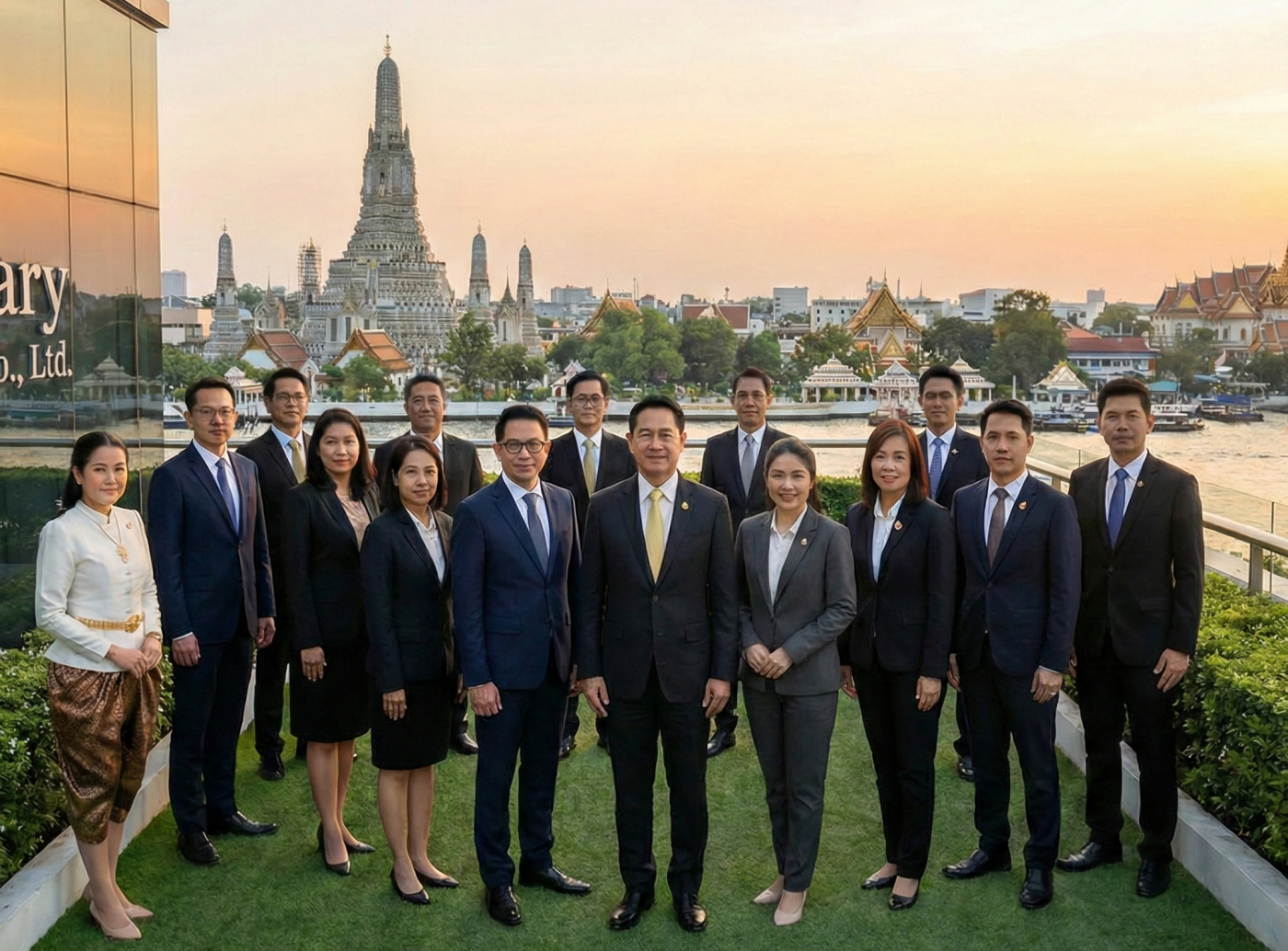
ทีมทนาย Notary Public ของเรา
ทุกการรับรองดำเนินการโดยทนายความผู้ขึ้นทะเบียนเป็น 'ทนายความผู้ทำคำรับรองลายมือชื่อและเอกสาร' กับสภาทนายความในพระบรมราชูปถัมภ์ คลิกที่ใบอนุญาตเพื่อดูฉบับเต็ม
Every case we take starts from the same question: which authority receives this document, and what will they accept on the day? That question decides the translator, the certification, the ministry route and the timeline — and getting it wrong is why documents come back.

A birth certificate for a German family reunification visa, for a US immigrant petition and for an Australian partner visa are three different jobs. One needs a translator on the embassy's own list, one needs a Hague apostille, one needs a NAATI-certified translation with no legalisation at all. A provider who treats them as the same job will produce a document that is technically correct and still refused. We work backwards from the receiving authority's own published requirement, and we say so in writing before you pay.
MFA legalisation at Chaeng Watthana and apostille under the Hague Convention, plus embassy counter-legalisation where the destination still requires it.
Translations produced to the standard the specific receiving authority demands, not a generic certificate of accuracy.
Signature and copy certification, affidavits, powers of attorney and identity verification for use outside Thailand.
Royal Thai Police criminal record certificates, with translation and legalisation for immigration use abroad.
Long-stay, work, family, retirement and investment routes, prepared as a complete evidence file.
Company registration, accounting, trademarks, marriage registration, permanent residence and naturalisation.
The country and the authority receiving the document decide every step that follows. We ask that first.
We check what you hold against what that authority accepts, and say what is missing before you pay.
Our fee and each government fee itemised, with a realistic turnaround rather than a best case.
Prepared by the translator or attorney that authority recognises.
Filed at the ministry, embassy or registrar, with the queue tracked on your behalf.
Collected in person at a Bangkok meeting point or couriered anywhere in the world.
NOTARY & APOSTILLE TRANSLATION INTERPRETERS (NAATI) CO., LTD., company registration number 043556400249. We are a Thai-registered company whose work is document legalisation, certified and sworn translation, notarial services attorney certification, and the visa and immigration filings those documents feed into.
Thailand has no civil-law notary. What exists is the Notarial Services Attorney, a lawyer licensed by the Lawyers Council of Thailand under the Ministry of Justice to certify signatures, copies, affidavits and identity for use abroad. Every notarisation we issue is signed by a currently licensed attorney whose licence number appears on the certificate, which is what a receiving authority actually checks.
We handle the major embassy languages in house — English, Chinese, Japanese, Korean, German, French, Spanish, Italian, Russian and Arabic — and work through vetted sworn translators for the rest. What matters more than the language is who is allowed to certify it: some embassies accept only their own listed translators, and we file to that list rather than to a generic certification.
Usually yes. Scans start the file, originals arrive by courier, and the finished set is couriered to any address worldwide. Steps that legally require your physical signature — an affidavit, an affirmation of freedom to marry, a power of attorney — can often be executed at a Thai embassy in your country instead, and we prepare the wording for that.
A written quotation before any work starts, itemising our fee and each government fee separately. Government fees are set by the ministry, not by us, and we pass them through at cost with the receipt. We do not start billable work on a verbal instruction.
If a rejection is caused by our error — a mistranslation, a missing certification page, a wrong stamp — we redo it and pay the re-submission fee. If it is caused by a rule change or a requirement the receiving authority applied on the day, we tell you plainly and quote the correction rather than absorb it silently.
We retain the working file for the period Thai record-keeping practice requires, in case a receiving authority queries the certification later. Files are not shared with third parties beyond the government offices your case is submitted to.
The Legalisation Division of the Department of Consular Affairs at Chaeng Watthana, the Ministry of Justice, the Royal Thai Police criminal records office, provincial amphoe registrars, the Department of Business Development, the Department of Intellectual Property, Immigration, and the embassies and consulates in Bangkok.
One team handles the full chain — translation, notarisation, MFA legalisation and embassy attestation — so your document is accepted the first time.
Send a photo or scan and our staff will confirm the exact steps, supporting documents and realistic turnaround under the receiving authority's current rules.
Send a photo of the document and tell us the country it is going to. You get an honest read on the correct route, the realistic timeline and the total cost before you commit to anything.