Litigation bundles
Pleadings, exhibits, expert reports and correspondence translated as one consistent set, with a shared glossary so party names and defined terms never drift between documents.
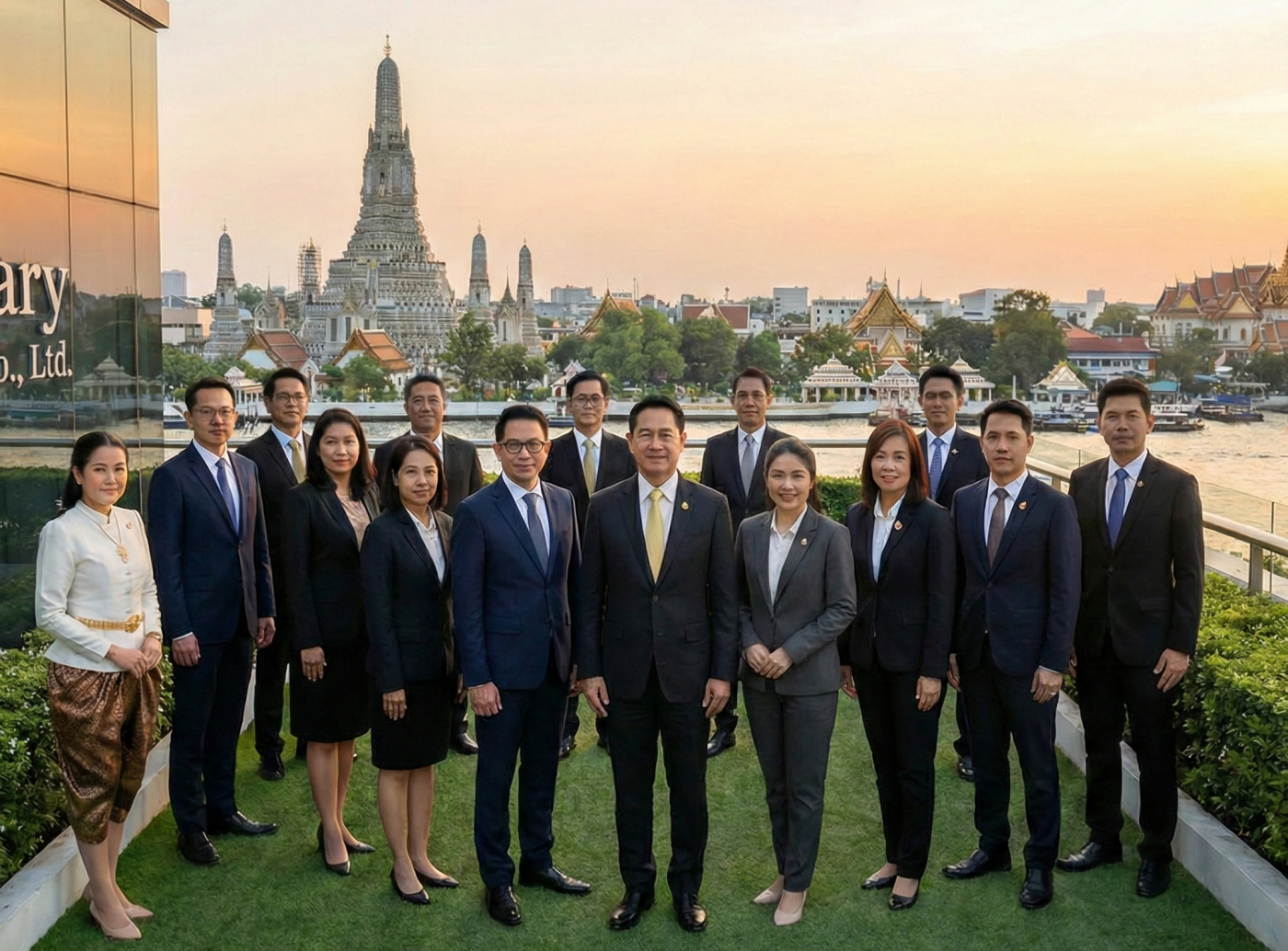
ทีมทนาย Notary Public ของเรา
ทุกการรับรองดำเนินการโดยทนายความผู้ขึ้นทะเบียนเป็น 'ทนายความผู้ทำคำรับรองลายมือชื่อและเอกสาร' กับสภาทนายความในพระบรมราชูปถัมภ์ คลิกที่ใบอนุญาตเพื่อดูฉบับเต็ม
Legal documents fail in Thailand for procedural reasons far more often than linguistic ones: the source was never authenticated, the translator cannot be identified, or a name is spelled two ways across one bundle. We prepare court-standard translations with the declaration attached and carry the file through Apostille or embassy legalisation where it is needed.
A Ministry of Justice translation is a Thai legal translation carrying a signed declaration from a translator the courts accept. Thailand appoints no sworn translators by statute, so that declaration — together with correct authentication of the source document — is what makes a translation usable in a Thai court file. Foreign public documents are Apostilled or legalised abroad first, then translated into Thai.
Pleadings, exhibits, expert reports and correspondence translated as one consistent set, with a shared glossary so party names and defined terms never drift between documents.
Thai judgments translated for use abroad, and foreign judgments translated into Thai for recognition or enforcement proceedings in Thailand.
Foreign divorce decrees, custody and maintenance orders, and adoption papers — usually authenticated abroad first, then translated for the Thai district office or court.
Contracts, term sheets, shareholder agreements and board resolutions where the translation itself may be argued over, so terminology choices are documented.
Instruments granting authority to Thai counsel, prepared so the wording survives both the notarial or Apostille step and the court's own scrutiny.
Documents supporting recognition of a foreign award or judgment, translated with the authentication chain assembled in the right order.
Share the document and tell us the court, office or hearing date involved. That decides whether the court standard is needed and how the legalisation steps are sequenced.
For foreign documents we confirm whether an Apostille or embassy legalisation is required before translation, so the work is not wasted on an unauthenticated source.
A legal translator produces the Thai or English version and records name spellings, dates and defined terms so the whole bundle stays consistent.
The signed accuracy declaration is attached, identifying the translator for the court record.
Where the document travels further, we handle certification at the Department of Consular Affairs and the Apostille or embassy legalisation step.
Court practice and government processing times vary by case and office. Confirm any deadline-critical step with the court or authority concerned before relying on it.
It is a translation prepared for use in Thai legal proceedings by a translator whose work the Ministry of Justice and the courts accept, accompanied by a signed declaration of accuracy identifying the translator. Thailand does not appoint sworn translators by statute, so this declaration plus the translator's record is what gives the translation standing in a Thai court file.
Complaints and pleadings, judgments and court orders, powers of attorney used in litigation, affidavits and witness statements, contracts in dispute, company documents filed as evidence, foreign divorce and custody decisions being recognised in Thailand, and documents supporting enforcement of a foreign judgment.
Sometimes, but it is risky. A court or opposing counsel can challenge a translation, and if the translator cannot be identified or is not accepted by the court the evidence may be disregarded or the hearing adjourned. Where the document is central to the case, use the court standard from the start rather than re-doing it under time pressure.
Yes. A foreign public document normally has to be authenticated in its country of origin first. Since the Apostille Convention will enter into force for Thailand on 28 February 2027, a document from another Convention state carries an Apostille instead of Thai embassy legalisation. Documents from non-member states still need legalisation by the Thai embassy or consulate abroad. Translation into Thai comes after that authentication.
For court use, the translator's signed declaration is attached to the translation. If the translated document will also be sent abroad or presented to another Thai ministry, the Department of Consular Affairs of the Ministry of Foreign Affairs may need to certify the translation as part of the legalisation or Apostille chain. Tell us the full onward path so the file is prepared once.
Personal names must match the spelling in the passport or Thai identity document exactly, Thai Buddhist Era dates are rendered with the Gregorian equivalent, and legal terms follow the terminology used in Thai statutes rather than a literal rendering. Inconsistent name spelling across a bundle is the most frequent cause of a filing being questioned.
It depends on length, complexity and whether legalisation follows. Send the file and we will confirm a working-day range before you commit; where a hearing date is fixed, tell us the date and we plan the legalisation steps backwards from it. Processing times at government offices are outside our control and we do not promise a queue we cannot guarantee.
Yes. We prepare the translation, attach the translator declaration, and where required take the document through certification at the Department of Consular Affairs and on to Apostille or embassy legalisation, so a single file passes through one team instead of several.
Send the document and tell us which court or office receives it. We confirm the authentication chain and the translation standard before any work starts.

Want us to check your documents before you file? Call 080-5578887 or message LINE @NAATI
This page is compiled from the notices and manuals published by the agencies below. Rules, fees and forms change — confirm with the receiving authority before you proceed.
One team handles the full chain — translation, notarisation, MFA legalisation and embassy attestation — so your document is accepted the first time.
Send a photo or scan and our staff will confirm the exact steps, supporting documents and realistic turnaround under the receiving authority's current rules.