Thai limited company
Name reservation, memorandum of association, statutory meeting, registration at the Department of Business Development, company seal, affidavit and certified English translations of the corporate set.
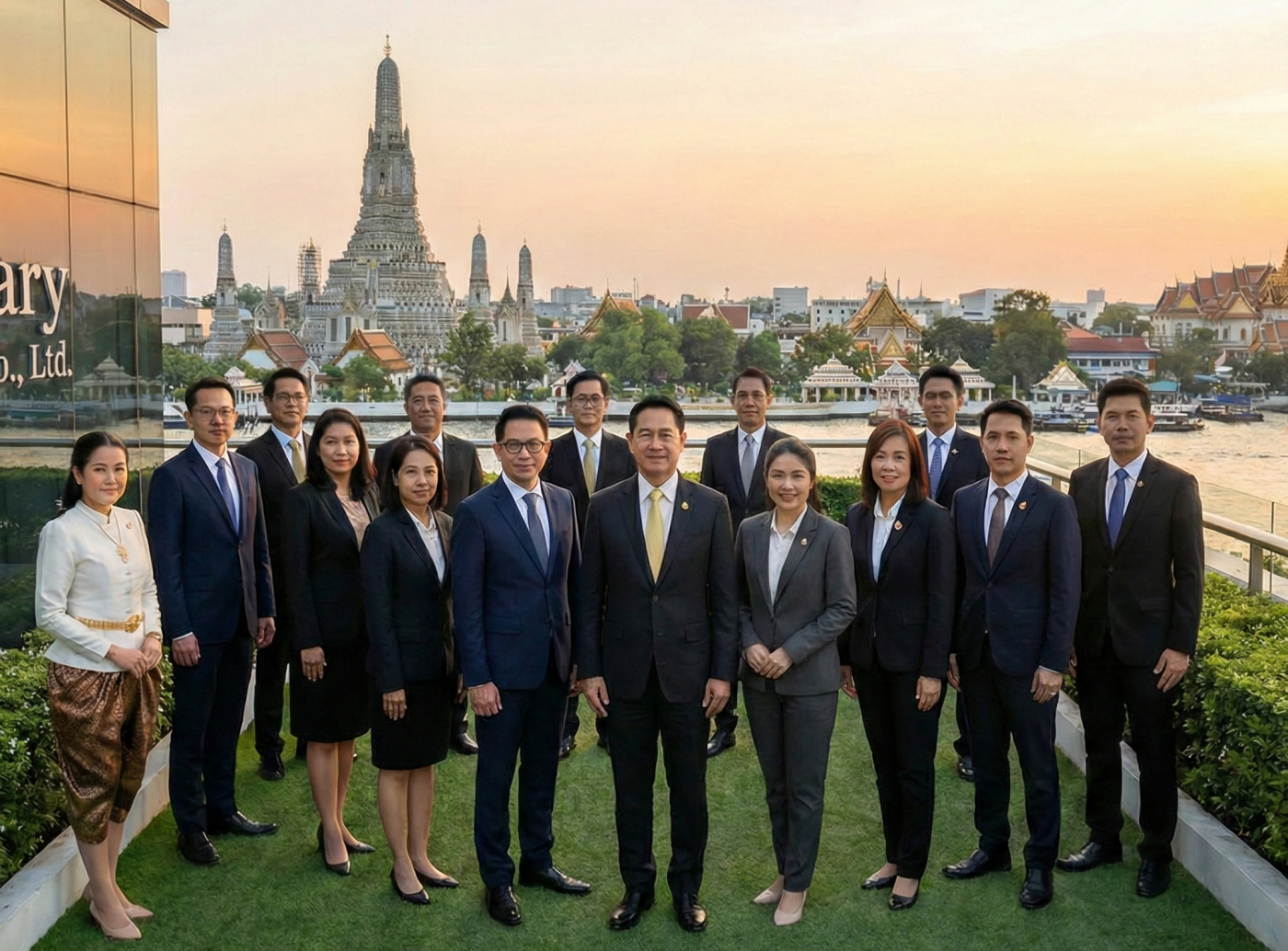
ทีมทนาย Notary Public ของเรา
ทุกการรับรองดำเนินการโดยทนายความผู้ขึ้นทะเบียนเป็น 'ทนายความผู้ทำคำรับรองลายมือชื่อและเอกสาร' กับสภาทนายความในพระบรมราชูปถัมภ์ คลิกที่ใบอนุญาตเพื่อดูฉบับเต็ม
Incorporation, tax and social security registration, corporate banking support, and the certified translation and legalisation your overseas shareholders need — arranged as one file instead of five separate vendors.

Most foreign-owned companies that run into trouble in Thailand were registered correctly but structured carelessly: objectives too narrow for the roles they later hire, capital too low for the work permits they need, or shareholding arranged in a way that cannot survive scrutiny under the Foreign Business Act. We settle ownership, capital and objectives first, then file — so the company you register still works when you apply for visas, VAT refunds or a bank account.
Name reservation, memorandum of association, statutory meeting, registration at the Department of Business Development, company seal, affidavit and certified English translations of the corporate set.
Activity eligibility review, application support and the One Stop Service Centre route for visas and work permits once promotion is granted.
US-owned businesses seeking majority or full ownership under the Treaty, including the certification file the Department of Commerce expects.
Foreign parent documents legalised and translated, objectives drafted to fit the permitted scope, and the remittance schedule the authorities require.
VAT and withholding tax registration, social security enrolment, e-filing set-up and a monthly compliance calendar so nothing is filed late.
Adding or removing directors, share transfers, capital increases, address changes and amended objectives — each with the DBD filing and translations required.
We map your activity against the Foreign Business Act, decide between a limited company, branch, representative office or BOI route, and size the registered capital to your work permit plan.
Company name check, memorandum of association, objectives drafted broadly enough for the jobs you will hire for, and shareholder documentation.
Apostille or embassy legalisation of overseas corporate documents, MFA certification in Bangkok and certified Thai translation.
Statutory meeting, registration filing and issue of the company affidavit, shareholder list and registration certificate.
VAT and employer registrations, e-filing credentials, and the document pack and briefing for the corporate bank account.
Non-B visas and work permits for the foreign team, then the annual accounting, audit and reporting cycle that keeps them renewable.
Only in specific situations. The Foreign Business Act restricts many activities to majority Thai ownership unless you hold a Foreign Business Licence or Certificate, are promoted by the Board of Investment, or qualify under a treaty such as the US–Thai Treaty of Amity. Manufacturing and export-focused businesses are frequently able to be foreign-majority; retail, most services and land-related activities usually are not without a licence.
A private limited company currently requires a minimum of two promoters/shareholders and at least one director. Directors may be foreign nationals. Nominee shareholding purely to disguise foreign control is illegal, so the Thai shareholders in your structure must have genuine funds and a real role.
Capital is driven by what you need it to do, not by a single rule: two million baht of paid-up capital per foreign work permit is the standard Department of Employment benchmark, while the Foreign Business Act sets its own minimums for restricted activities. We size the capital against your hiring plan and licensing route before the memorandum is filed.
With a complete file — name reservation, memorandum, statutory meeting documents and directors' signatures — registration at the Department of Business Development is usually completed within a few working days. Adding VAT registration, social security registration and the corporate bank account extends the schedule, and bank onboarding is normally the slowest step.
Yes. Passports, corporate shareholder certificates, board resolutions and powers of attorney issued abroad must be presented in certified Thai translation, and corporate documents generally need an Apostille or embassy legalisation followed by Thai Ministry of Foreign Affairs certification. We do the translation and legalisation in the same engagement.
Keep statutory accounts, file monthly withholding tax and VAT returns where applicable, submit social security contributions for employees, file the half-year and annual corporate income tax returns, hold an annual general meeting and lodge audited financial statements with the Department of Business Development. Missing these is the most common cause of problems at work permit renewal.
A limited company is a separate Thai legal entity and the usual choice for trading. A branch is an extension of the foreign parent and carries the parent's liability. A representative office may only conduct non-revenue activities such as sourcing, quality control and reporting to head office. The right form depends on whether you will invoice from Thailand.
We prepare the pack Thai banks ask for — company affidavit, shareholder list, objectives, director identification, office lease and a clear business description in Thai — and brief you for the branch interview. The account decision remains the bank's.
One team handles the full chain — translation, notarisation, MFA legalisation and embassy attestation — so your document is accepted the first time.
Send a photo or scan and our staff will confirm the exact steps, supporting documents and realistic turnaround under the receiving authority's current rules.
Tell us what the business will do, who owns it and how many foreign staff you plan to employ. We reply with the recommended structure, the capital it implies and the documents your shareholders must legalise.