Apostille and legalisation
Which route your destination requires, and why the two are never interchangeable.
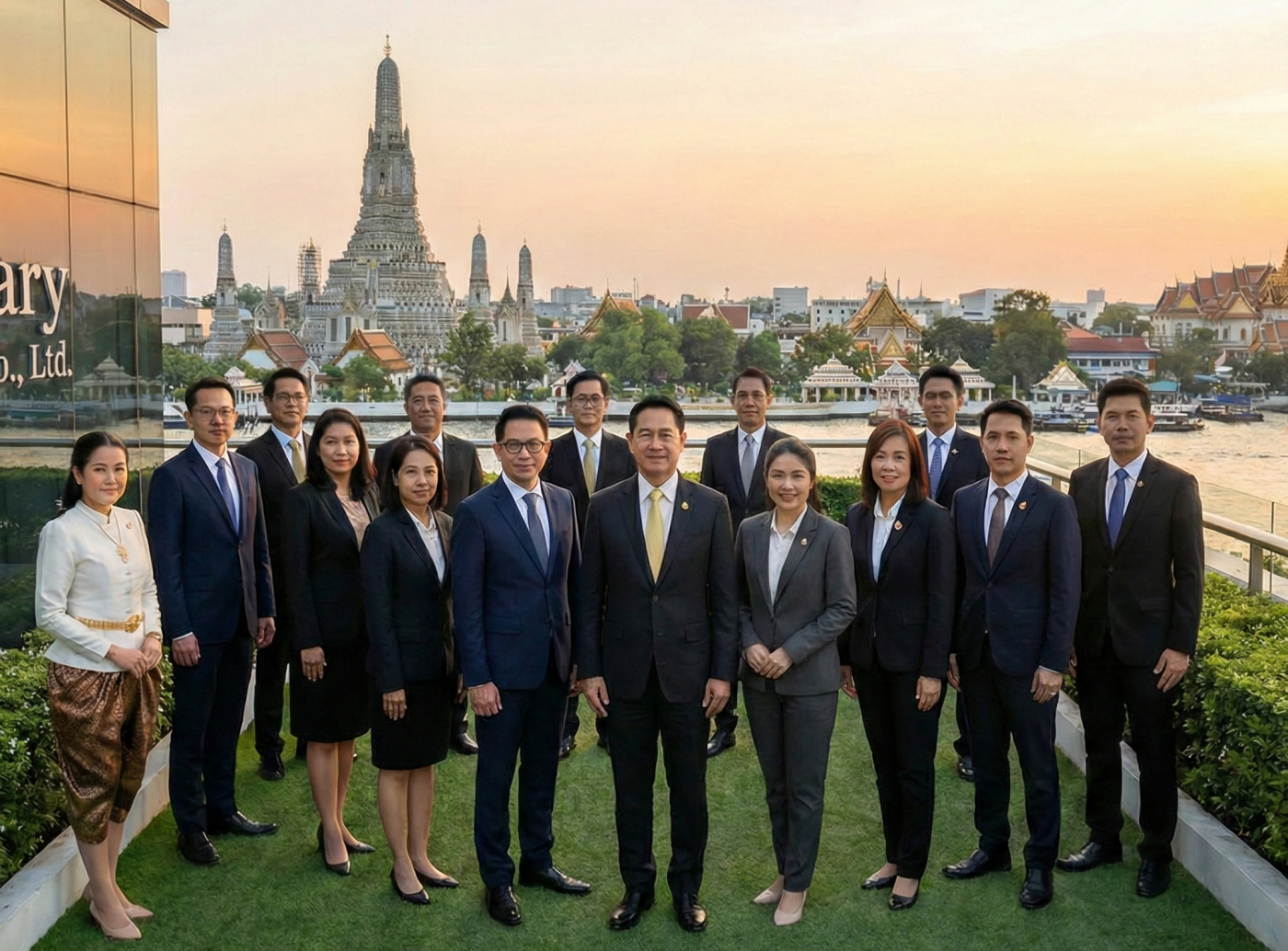
ทีมทนาย Notary Public ของเรา
ทุกการรับรองดำเนินการโดยทนายความผู้ขึ้นทะเบียนเป็น 'ทนายความผู้ทำคำรับรองลายมือชื่อและเอกสาร' กับสภาทนายความในพระบรมราชูปถัมภ์ คลิกที่ใบอนุญาตเพื่อดูฉบับเต็ม
The questions below cover the decisions that actually determine whether a document is accepted: which certification route applies, who is allowed to certify a translation, and how long each government queue genuinely takes.

The receiving authority sets the requirement. Not the Thai office that issued the document, not the translator, not the agent. Before spending anything, find the destination authority's own published wording — an embassy checklist, an immigration instrument, a university admissions page — and work backwards from it. Where that wording is ambiguous, the safe reading is the stricter one, because a document with one certification too many is accepted while a document with one too few is returned.
Which route your destination requires, and why the two are never interchangeable.
Sworn, NAATI-certified, MFA-standard or agency certified — matched to the receiving authority.
What a Thai notary can lawfully certify, and where the Thai system differs from a civil-law notary.
Realistic ranges for ministry, police, amphoe and embassy queues, including holiday effects.
Our fee and each government fee itemised separately, always in writing before work starts.
How a case runs end to end when you are outside Thailand.
Everything else follows from who receives the document and under which rulebook.
Obtain short-lived certificates last so they do not expire in a queue.
Sworn list, NAATI, or MFA standard — not whichever is cheapest.
Issuing office, ministry, then embassy where a non-Hague destination requires it.
One spelling of every name across passport, certificates and translations.
Book appointments against the standard queue, not the express best case.
Yes. Thailand acceded to the Hague Apostille Convention and apostilles are issued by the Department of Consular Affairs. For a destination that is also a Convention member, an apostille replaces the old chain of MFA legalisation followed by embassy legalisation. For a non-member destination, that older two-step chain still applies.
Both certify that a signature and seal on a document are genuine. An apostille is a single standardised certificate accepted by every Hague member without further steps. Legalisation is the older bilateral chain: the Thai ministry certifies the document, then the destination country's embassy in Bangkok certifies the ministry. Which one you need is decided entirely by the destination country, never by preference.
No. A Notarial Services Attorney licensed by the Lawyers Council may certify signatures, copies, identity, affidavits and declarations for use abroad. They cannot make an untrue document true, cannot certify a Thai government record as authentic in place of the issuing office, and cannot substitute for ministry legalisation where the destination requires it.
It depends on the receiver. The Thai Ministry of Foreign Affairs legalises translations that meet its own standard. Several European embassies accept only sworn translators on their published list. Australian immigration requires NAATI-certified translators. A university or an employer may accept any competent agency certification. Sending the wrong category is the single most common cause of rejection.
The Chaeng Watthana legalisation counter runs an express service measured in roughly one working day and a standard service measured in several. Volumes spike before school terms and after long holidays, so plan to a realistic range rather than the best case, and never book a flight or an embassy appointment against the fastest possible outcome.
The document does not, but the receiver's acceptance window does. Many embassies will not accept a police clearance, a marriage status certificate or a bank letter older than three or six months, and some count that window from the date of issue rather than the date of legalisation. Sequence the case so the short-lived documents are obtained last.
In most cases yes. Scans start the file, originals travel by courier, and the finished set is couriered back. Steps that require your own signature can often be executed at a Royal Thai Embassy in your country of residence instead of in Bangkok.
Four things, in order of frequency: a translation certified by someone the receiver does not recognise, a name spelled differently across documents, a missing intermediate certification in the chain, and a document that expired while sitting in a queue. All four are avoidable at the review stage, which is why the review is free.
No honest provider can. Approval is a discretionary decision by an immigration officer or a consular officer. What we can control is that the file is complete, correctly translated, correctly legalised and internally consistent — which is what most refusals actually turn on.
Our fee is quoted separately from government fees, which are set by the ministry and passed through at cost with the receipt. Any quotation that bundles them into one round number is hiding which part is negotiable and which part is not.
One team handles the full chain — translation, notarisation, MFA legalisation and embassy attestation — so your document is accepted the first time.
Send a photo or scan and our staff will confirm the exact steps, supporting documents and realistic turnaround under the receiving authority's current rules.
Send the document and the destination country. We answer specific cases rather than general ones, and the review costs nothing.