SMART T — Talent
Skilled experts in a targeted industry, with salary and expertise evidence prepared for the endorser.
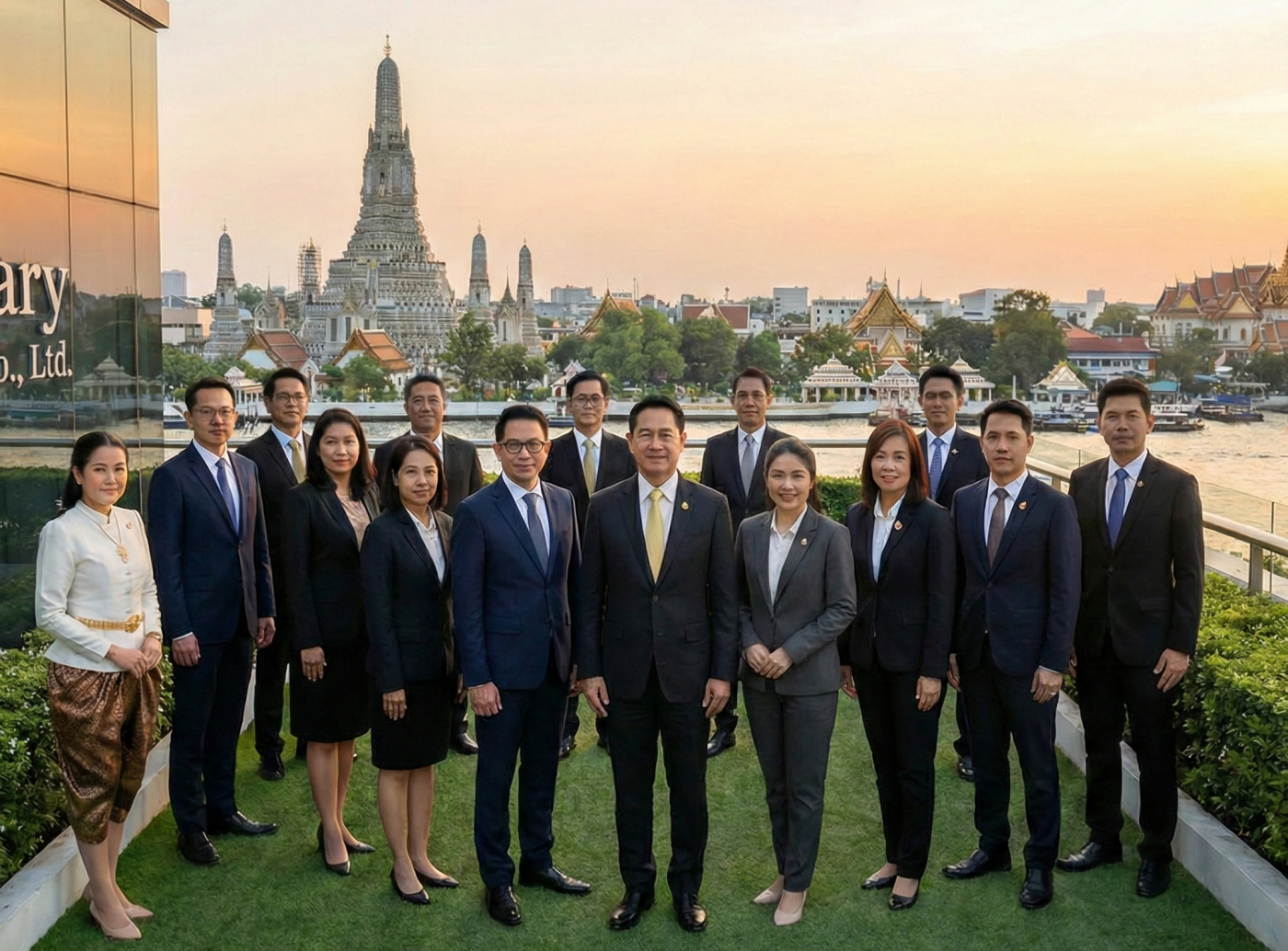
ทีมทนาย Notary Public ของเรา
ทุกการรับรองดำเนินการโดยทนายความผู้ขึ้นทะเบียนเป็น 'ทนายความผู้ทำคำรับรองลายมือชื่อและเอกสาร' กับสภาทนายความในพระบรมราชูปถัมภ์ คลิกที่ใบอนุญาตเพื่อดูฉบับเต็ม
Five categories covering talent, investors, executives, startup founders and their families, across Thailand's targeted S-curve industries — with annual reporting, a working spouse and no separate work permit for the endorsed role.

Applicants treat SMART as a visa process and are surprised when it stalls. It is really an endorsement process with a visa attached: a sector agency has to agree that your role, your employer and your qualifications belong to a targeted industry. Get the category and the endorser right at the start and the rest is administration. Get them wrong and you spend months proving the wrong thing to the wrong agency.
Skilled experts in a targeted industry, with salary and expertise evidence prepared for the endorser.
Direct investment in a qualifying Thai company or a registered venture fund, evidenced with remittance proof.
Senior management roles with qualification, seniority and employer standing documented.
Founders with an incubator, accelerator or agency backing, deposit evidence and a business plan.
Spouse and children, with the spouse's permission to work without a separate work permit.
DEPA, NIA, TCELS and sector agency submissions handled end to end.
We confirm your activity falls inside a targeted industry and pick the strongest category.
The Thai employer's registration, financials and industry classification checked before filing.
Application to the competent agency with the qualification and salary evidence it expects.
The BOI issues the endorsement letter once the agency confirms.
Stamped at a Thai embassy abroad or converted at the One Stop Service Center in Bangkok.
Yearly reporting instead of 90-day, and renewal aligned to your contract term.
A BOI-administered visa for highly skilled professionals, investors, executives and startup founders working in Thailand's targeted S-curve industries. Its defining benefits are that no separate work permit is required for the endorsed activity, reporting moves from every 90 days to once a year, and the holder's spouse and children receive dependent status with the spouse permitted to work.
SMART T for talent — skilled experts in a targeted industry; SMART I for investors in a qualifying Thai company or fund; SMART E for senior executives; SMART S for startup founders; and SMART O for the spouse and legal dependants of a holder in any of the other categories.
The targeted S-curve list — next-generation automotive, smart electronics, affluent and medical tourism, agriculture and biotechnology, food innovation, robotics and automation, aviation and logistics, biofuels and biochemicals, digital, medical hub, defence, human resource development in science and technology, and environmental management. The endorsing agency depends on which one your activity falls under.
Before the visa is issued, a Thai government agency competent in your field must confirm that your role, employer and qualifications meet the category criteria — DEPA for digital, NIA for innovation and startups, TCELS for life sciences, and others by sector. Endorsement is the substantive assessment; the visa issuance that follows is largely administrative. A file that is weak at endorsement cannot be rescued at the consular stage.
Up to four years, but never longer than the employment contract or the endorsed activity that supports it. A two-year contract yields a two-year visa. Renewal is available where the underlying role and endorsement continue.
Correct, for the endorsed activity with the endorsed employer. Working outside that scope, or for a different company, requires a fresh endorsement — the exemption follows the endorsement, not the person.
Yes. A SMART O spouse may work in Thailand without a separate work permit, which is the single largest practical difference between SMART and a conventional Non-B plus work permit arrangement. Dependent children receive matching permission to stay.
LTR runs ten years and is driven mainly by income, wealth and remote-employer criteria; SMART runs up to four and is driven by your role within a targeted industry and its endorsement. Salaried specialists in an S-curve sector usually qualify for SMART more easily; high-income remote workers and wealthy retirees usually fit LTR better. We map both before you file.
One team handles the full chain — translation, notarisation, MFA legalisation and embassy attestation — so your document is accepted the first time.
Send a photo or scan and our staff will confirm the exact steps, supporting documents and realistic turnaround under the receiving authority's current rules.
Send your role, employer, industry and salary. We reply with the category that fits, the agency that must endorse it, the evidence they will want, and an honest comparison against the LTR visa.